Category
AI Strategy & Leadership
How to lead in the agentic era: AI strategy, org design, governance, the PM-to-builder shift, and what executive adoption actually looks like in practice.
Category
How to lead in the agentic era: AI strategy, org design, governance, the PM-to-builder shift, and what executive adoption actually looks like in practice.
Showing 1–12 of 37 articles in AI Strategy & Leadership

ClickUp's 100x organisation memo gets the bottleneck right but the strategy wrong: AI-native teams are built around review, not cuts.

Solo polymath or multiplayer trio? Wrong frame. In the agentic coding era, the Three Amigos became a coordination protocol, and the strong ones win.

Alignment mechanics were scaffolding for moving information through slow orgs. Agents move it instantly. What's left is the conviction the scaffolding hid.

In stable markets, plan your next job. In exponential markets, plan the one after. Why title cuts today are the highest-return career move of the decade.
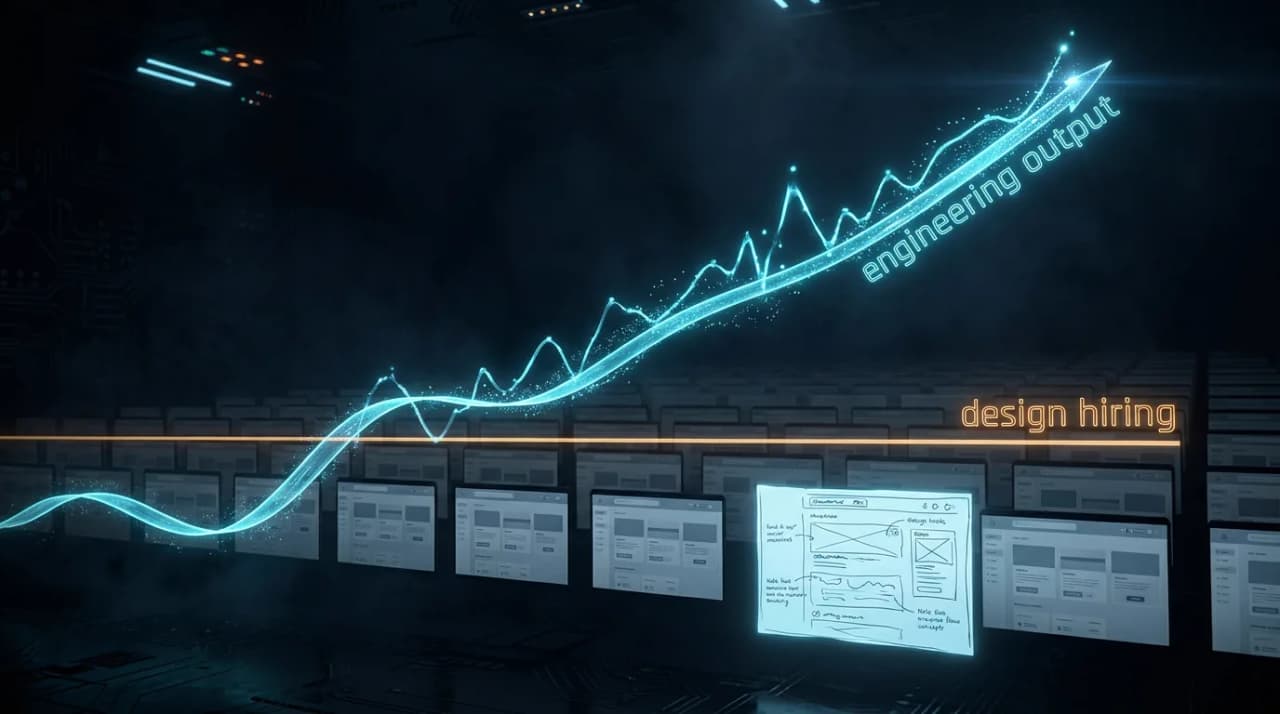
Teams shipping 10x more product aren't hiring more designers. Design still matters; most orgs just hire for the wrong part of it.

The hiring signal has inverted. Prestige credentials from the big-tech era correlate weakly with AI fluency. Screen for recency, not brand.

Success in the old operating model is a reinvention tax. The senior leaders who mastered roadmap theatre and stakeholder alignment struggle most to adapt.

The 2024–2026 layoff cycle isn't a ZERP correction. It's a talent swap at a 3.75:1 ratio, with an entirely different skill filter. Most discourse misses it.

Energy, chips, systems, models, applications. Every layer matters. Only one pays compounding returns. A framework for picking yours.

Keith Rabois' barrels vs. ammunition framework reframes what AI changes about teams. More ammunition without more barrels solves the wrong problem.

Most enterprise AI teams centralise first, then decentralise. Both fail. Here's the hub-and-spoke structure that actually works.

90%+ enterprise AI tool access, most people stuck in chat. The rollout bottleneck isn't the model. It's the harness. Here's the product fix.