Platform Engineering Is Becoming Agent Operations
TL;DR
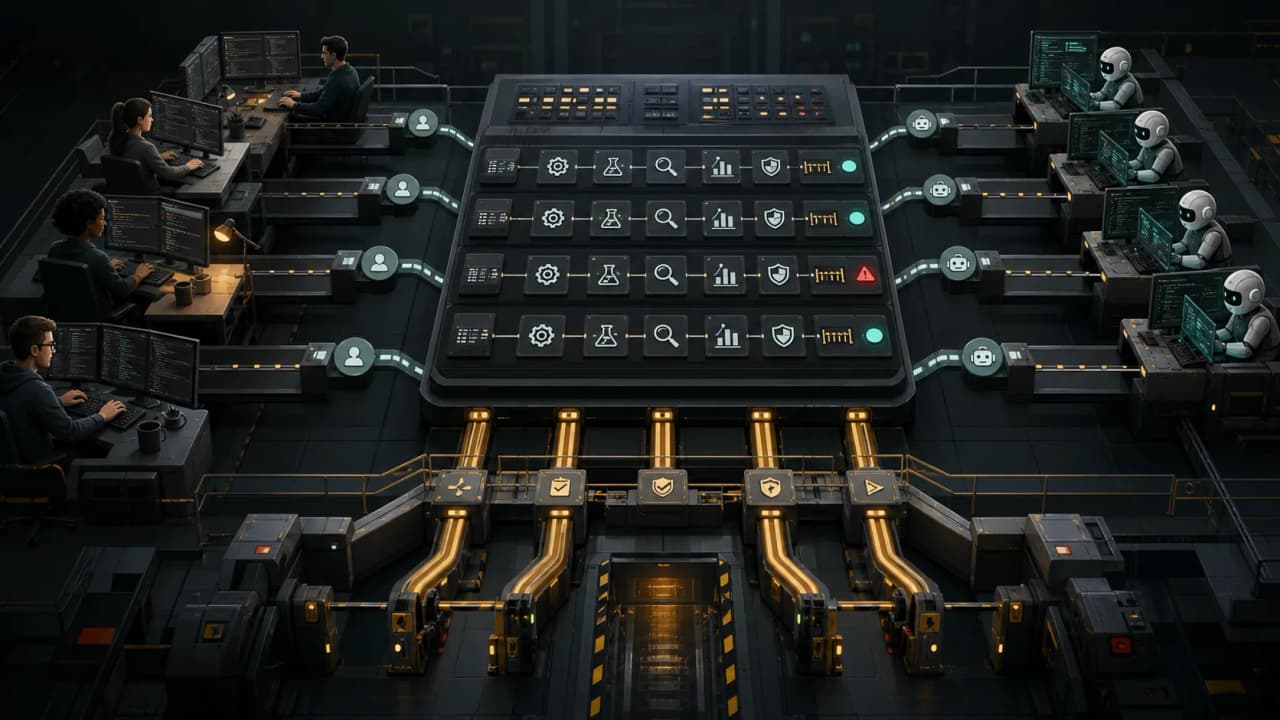
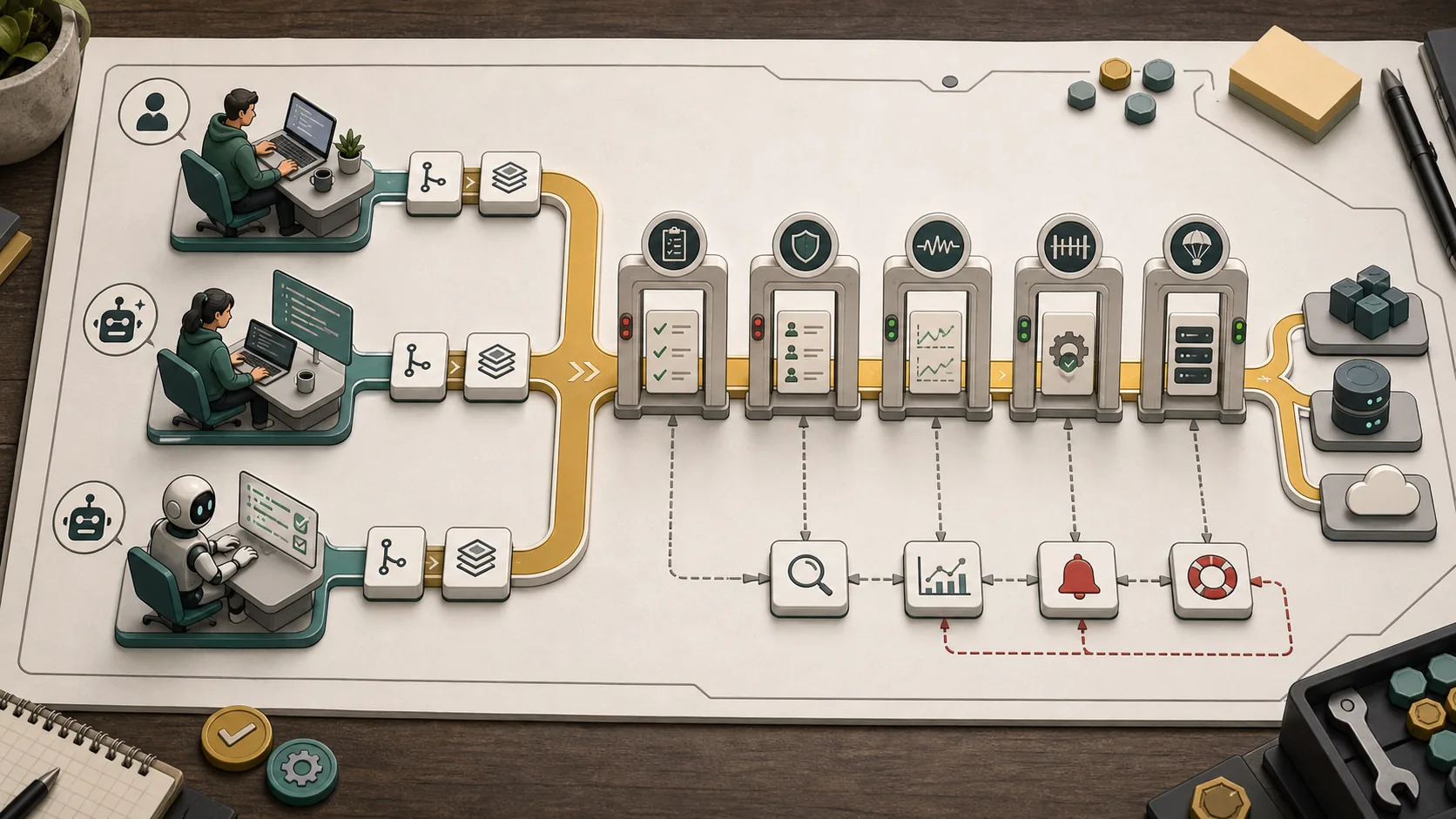
- Platform teams used to optimise for one customer: the human developer. In the agentic era, they have three: the human developer, the AI-assisted developer, and the agent operating inside the delivery system.
- The new platform product is not an AI coding tool. It is the control plane around the tool: context, permissions, hooks, tests, traces, evals, documentation, support, and lifecycle decisions.
- Teams that treat agentic DX as tooling will get demos. Teams that treat it as operations will get throughput without losing control.
Agentic AI changes platform engineering by adding a new operator to the software delivery system: the coding agent. Platform teams now own the environment where humans and agents share context, follow golden paths, run checks, recover from failure, and leave evidence behind.
That does not mean every platform engineer now builds agents. It means the platform team's customer has changed. The golden path is no longer just a path a human developer follows through docs, templates, CI, deployment, and observability. It is also the path an AI coding agent follows while reading the repo, editing code, running tests, opening PRs, and explaining what happened.
Old DX asked: can a developer do the right thing with low cognitive load?
Agentic DX asks a harder version: can a developer and their agents do the right thing repeatedly, with enough context, feedback, permission control, telemetry, and recovery to trust the result?
That is a platform product problem. Not a procurement problem. Not a prompt library.
Agentic Platform Engineering Has Three Customers
The first customer is still the human developer.
They need a fast path from idea to production. Good docs. Clear errors. Templates that encode the boring decisions. A way to deploy, observe, and recover without filing five tickets. DORA's platform engineering guidance still holds: start with a minimum viable platform, design for extensibility, and prioritise clear feedback when something fails. The 2025 DORA AI report made the adjacent point sharper: AI amplifies the surrounding system, including the quality of internal platforms and workflows.
The second customer is the AI-assisted developer.
This person is still in charge, but they now work by delegation. They hand off refactors, tests, migrations, bug investigations, documentation updates, and first-pass implementations. Their bottleneck is not typing. It is shaping work, reviewing output, and keeping concurrent agent runs from creating entropy faster than the team can absorb it.
The third customer is the agent.
That sounds odd until you watch one work. An agent does not understand your platform through vibes. It reads files, follows conventions, executes commands, parses errors, searches docs, calls tools, and tries to infer architecture from whatever artefacts are available. If those artefacts are stale, vague, contradictory, or hidden in a senior engineer's head, the agent will still act. It will just act badly.
This is why platform work gets more valuable, not less, when coding agents improve.
AI removes some implementation labour. It does not remove the need for a delivery environment that can absorb higher change volume.
Tooling Is Not the Operating Model
Buying Codex, Claude Code, Cursor, Copilot, or whatever comes next is the easy part.
The hard part is deciding what those agents are allowed to touch, how they learn the architecture, which commands they should run, what evidence counts as done, who reviews their work, and which failures should stop the line.
OpenAI's harness engineering write-up is useful because it avoids the usual magic story. Their experiment produced a product with no manually written code, but the lesson was not "agents replace engineers." The lesson was environment design. The team had to make the repository legible, build a versioned knowledge store, maintain plans and decision logs, validate docs with CI, and treat agent legibility as a goal. Humans steered. Agents executed.
Anthropic's Claude Code direction points the same way. Checkpoints give developers a recovery point before wide changes. Hooks run deterministic actions when the agent edits files, finishes work, or needs input. Subagents and background tasks let more work happen in parallel. None of that removes control. It moves control into the platform.
A platform team that only says "we support AI coding tools" has not done the job.
Support means the platform can answer operational questions:
- Which repos are agent-ready?
- Which commands are safe for agents to run?
- Which tool calls require approval?
- Which tests run after agent edits?
- Which architectural boundaries cannot be crossed?
- Which docs are canonical, stale, or generated?
- Which agent actions created incidents, support load, or review drag?
Without answers, every team invents its own agent operating model. That looks like empowerment for a month. Then the duplicates, security exceptions, brittle scripts, and inconsistent review standards arrive.
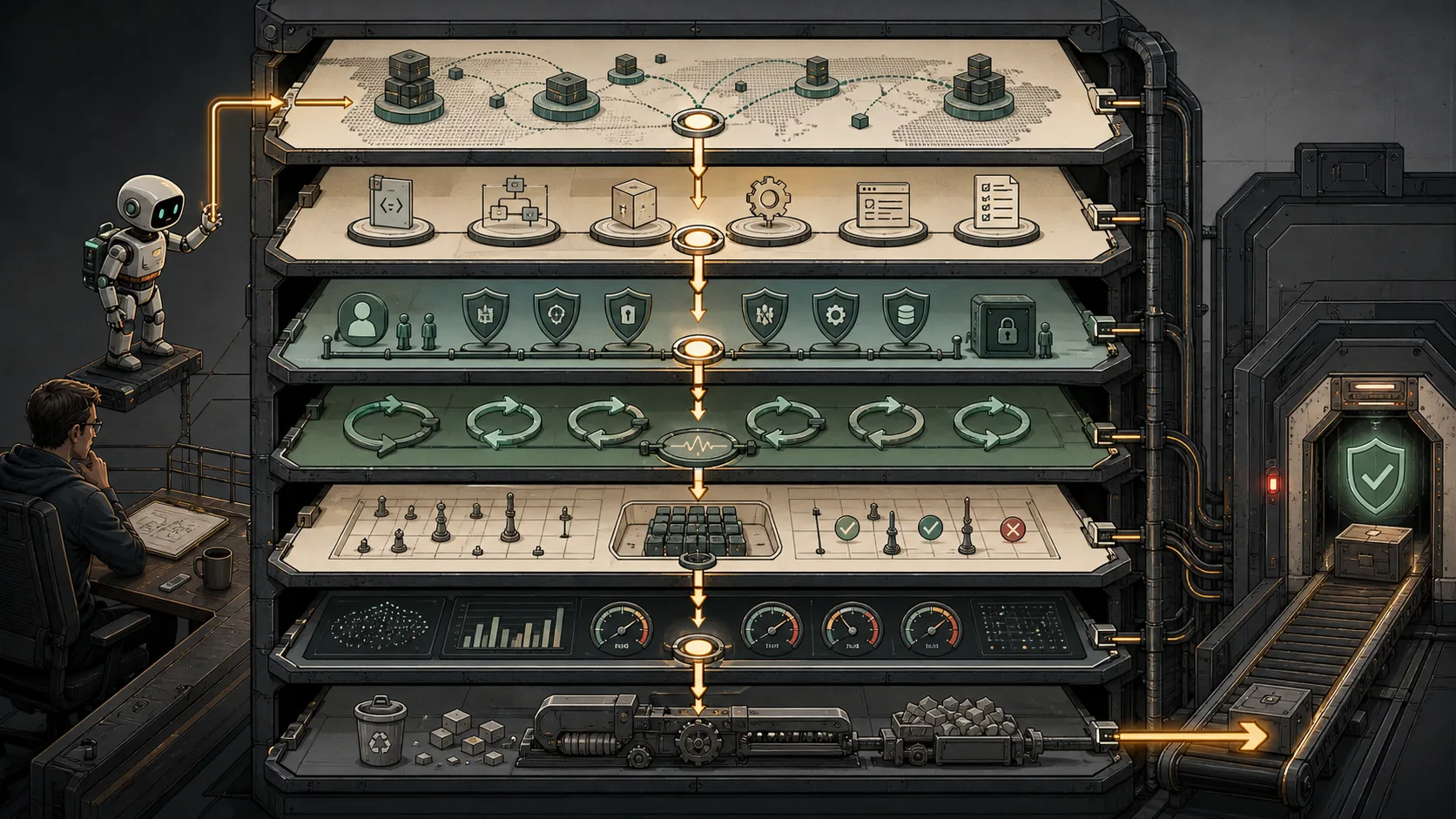
The New Golden Path Has Seven Layers
The old golden path was mostly about human self-service.
The agentic golden path is a control plane. I would design it in seven layers.
1. Context
Agents need the same thing new engineers need: a reliable map.
That map should include repository conventions, architecture boundaries, domain language, deployment paths, data model notes, product constraints, testing rules, and the team's definition of done. In practice, this looks like AGENTS.md, CLAUDE.md, architecture docs, generated schema docs, decision records, service catalogues, and task ledgers that stay close to the code.
The key difference: these artefacts now have two readers. Humans skim. Agents execute.
Write accordingly.
2. Golden Tasks
Platform teams already build golden paths. In the agentic era they also need golden tasks.
A golden task is a repeatable, machine-readable workflow an agent can execute safely: add a feature flag, write a migration, update a component, generate tests for a module, create a new service from a template, run a security checklist, update API docs, or investigate a failing build.
Bad tasks say "fix checkout."
Good tasks define the target files, commands, acceptance criteria, test scope, rollback path, and review owner.
The ticket becomes the prompt, but only if the platform team makes the ticket shape good enough for agents to use.
3. Permission
Human access control is not enough.
An agent acting for a developer should not inherit unlimited blast radius just because the developer has broad access. Tool access needs scope. Repo access needs scope. Secrets need scope. Production operations need explicit approval.
Internal developer platforms become control planes here. They should decide which agent can access which repo, which commands need confirmation, which environments are read-only, which side effects are blocked, and which high-risk workflows require a human checkpoint.
Least privilege stops being a security slogan. It becomes DX.
4. Feedback
DORA's platform capability research found that clear feedback on task outcomes is the platform behaviour most tied to positive developer experience. That becomes more important with agents because the human may not have watched every step.
Agents need feedback they can act on. Humans need feedback they can trust.
A failed command should say whether to retry, ask for permission, inspect logs, change scope, or stop. A CI failure should point to the likely class of issue. A blocked deployment should explain the policy boundary. A rejected tool call should say what approval is needed.
If the agent has to guess, the platform is leaking cognitive load back to the human.
5. Evaluation
Tests tell you whether code behaves. Evals tell you whether the agent behaved.
Platform teams should treat agent evals as shared infrastructure: did the agent choose a valid path, stay inside the task boundary, avoid unrelated files, preserve architecture constraints, run the right checks, explain the change accurately, and stop when evidence was insufficient?
That is different from model benchmarking. It is workflow evidence.
I wrote about agent evals as infrastructure because the pattern keeps repeating. Teams start with vibes, then they ship an agent, then they discover they cannot tell whether quality improved or just became harder to see.
In a platform setting, evals belong in the golden path. They should not be rebuilt by every squad.
6. Telemetry
Human DX telemetry used to care about deploy frequency, lead time, change failure rate, build health, onboarding time, and support tickets.
Agentic DX adds another layer:
- agent-initiated PRs per repo
- autonomous task success rate
- human review time per agent change
- CI failures caused by agent edits
- rollback rate by agent workflow
- tool calls per accepted PR
- stale-doc references used by agents
- security or permission blocks triggered
- support tickets avoided or created
Do not measure tool logins and call it adoption. Measure work.
The agent that saves no time but generates twelve review comments is not adoption. It is a hidden tax.
7. Lifecycle
Platform product management gets harder when agents enter the system because every golden path can multiply usage quickly.
If a template is good, agents will stamp it out everywhere. If it is wrong, agents will stamp it out everywhere faster.
Lifecycle decisions need to become more aggressive: grow the golden tasks that reduce review burden, evolve the ones that produce drift, retire workflows that create support load, and block patterns that repeatedly cross architecture boundaries.
This is the part most platform teams underinvest in. They launch a tool, adoption rises, and the team declares success.
Agentic platforms need active gardening. Docs go stale. Hooks accrete exceptions. Templates fall behind architecture. Evals stop matching production failures. The platform team's product work is not finished when the first agent run succeeds. That is when the real operating model starts.
What I Learned Building With Agents End to End
OpenChair and OpenTradie changed how I think about platform work.
Building a production-grade AI SaaS platform as a solo operator sounds like a story about speed. It is partly that. A large TypeScript/tRPC surface, native mobile clients, billing, observability, evals, multi-model orchestration and separate voice prototyping would have needed a much larger team a few years ago.
The bigger lesson was less glamorous: the agent is only as good as the environment it can read.
When the repo had clear conventions, typed boundaries, good tests, specific tasks, and visible telemetry, the agents felt like an extension of the team. When the docs were ambiguous or the task was underspecified, they produced plausible work that still required expensive human cleanup.
That is platform engineering in miniature.
The same pattern scales to any large engineering organisation. More teams do not make the problem different. They make the control plane more important.
How Platform Teams Should Operate Now
The operating model needs to shift from "build tools for developers" to "run the environment where humans and agents deliver software."
That changes the team's rituals.
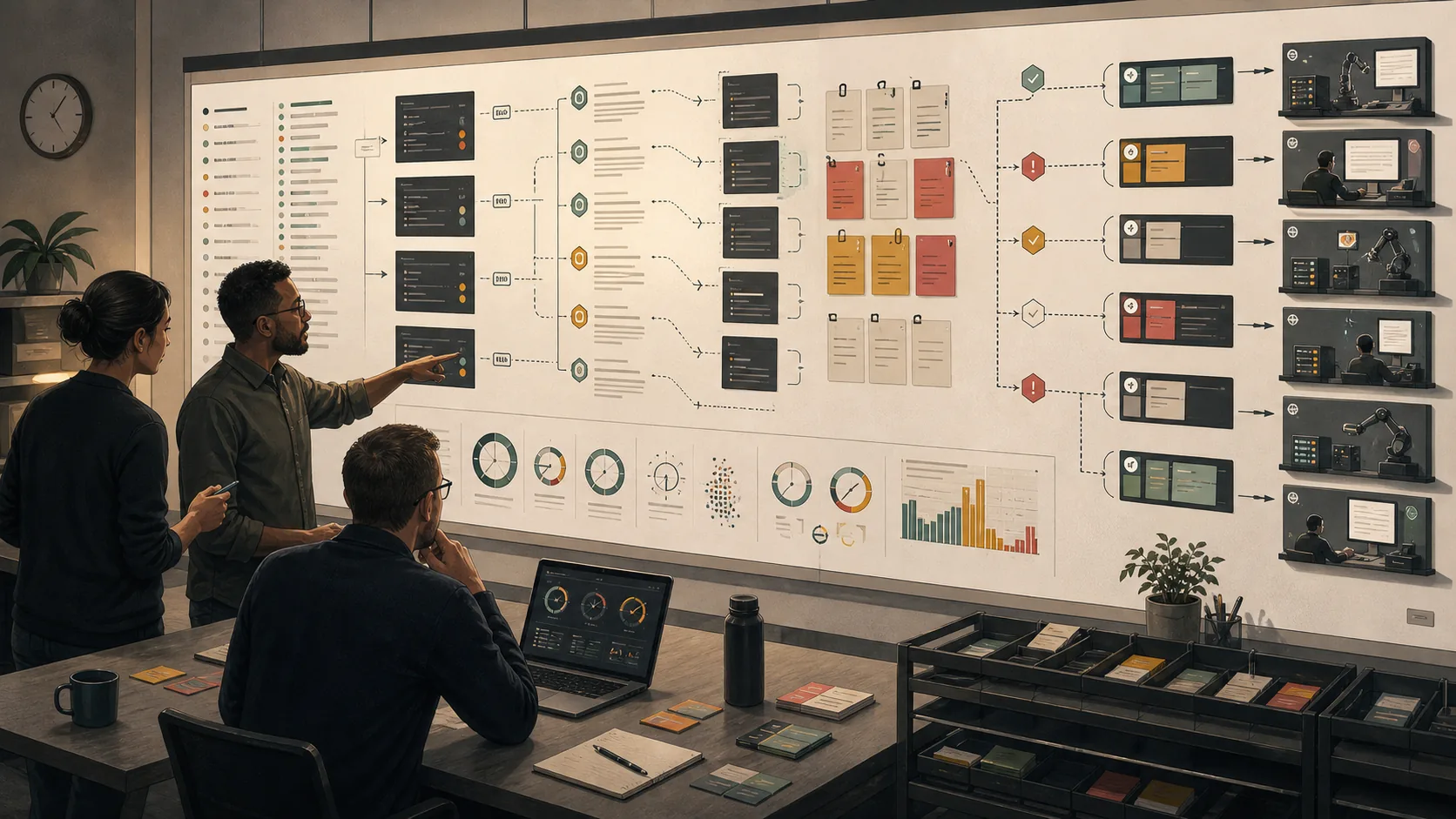
Weekly platform reviews should include agent workflow data: which golden tasks worked, which created review drag, which repos lacked context, which hooks blocked unsafe behaviour, which docs were used by agents and proved stale.
Roadmap prioritisation should weigh agent amplification. A weak template used by one team is annoying. A weak template used by agents across fifty repos is an incident factory. A clear error message that saves one developer five minutes might save hundreds of agent loops per week.
Support should classify whether the customer was human, AI-assisted, or agentic. "Developer confused by deployment error" is not the same failure as "agent retried blocked deployment command twelve times." Same product surface. Different fix.
Documentation should have owners, freshness checks, and machine-readable entry points. If your platform depends on a wiki page last touched in 2022, agents will find it. Then they will believe it.
Design reviews should include policy and telemetry. Every new golden path needs an answer for: what can the agent do, what can it not do, how do we know, and how does a human recover?
That is not bureaucracy. It is how the speed stays useful.
The Platform Team Becomes the Multiplier
The naive AI adoption story says engineering teams get faster because every developer has an agent.
The stronger version says engineering organisations get faster only when the platform team makes that agent work safely across the delivery system.
One developer with an agent can move quickly in one repo. One platform team with good context, templates, hooks, evals, telemetry, and lifecycle discipline can raise the floor for every team.
That is the strategic role of platform teams in the agentic era.
They are not the help desk. They are not the team that owns Jenkins. They are not the group telling engineers which AI tool procurement approved.
They are the product team for the software factory's operating environment.
And now that factory has agents on the floor.
Related: Agent-Ready Platforms Will Beat Browser-Only SaaS, Your Agent Evals Are Vibes. Here's How to Make Them Infrastructure., The Ticket Is the New Prompt, and You'll Get the AI Org Design Wrong Twice.
Logan Lincoln
Head of Product based in Currumbin Waters, Australia. Led a $70M regulated B2B SaaS portfolio at Cotality, then founded OpenChair and took its product strategy from market entry into paid production use.