Build Speed Is No Longer the Bottleneck. Judgment Is.

TL;DR
- AI compressed build time so aggressively that many teams can now generate more options than they can evaluate properly.
- The new product bottleneck is judgment: choosing which prototype to trust, how to test it, and when to kill it.
- Product management in the AI era shifts from writing detailed specs to designing decision systems: hypotheses, tests, thresholds, and review cadences.
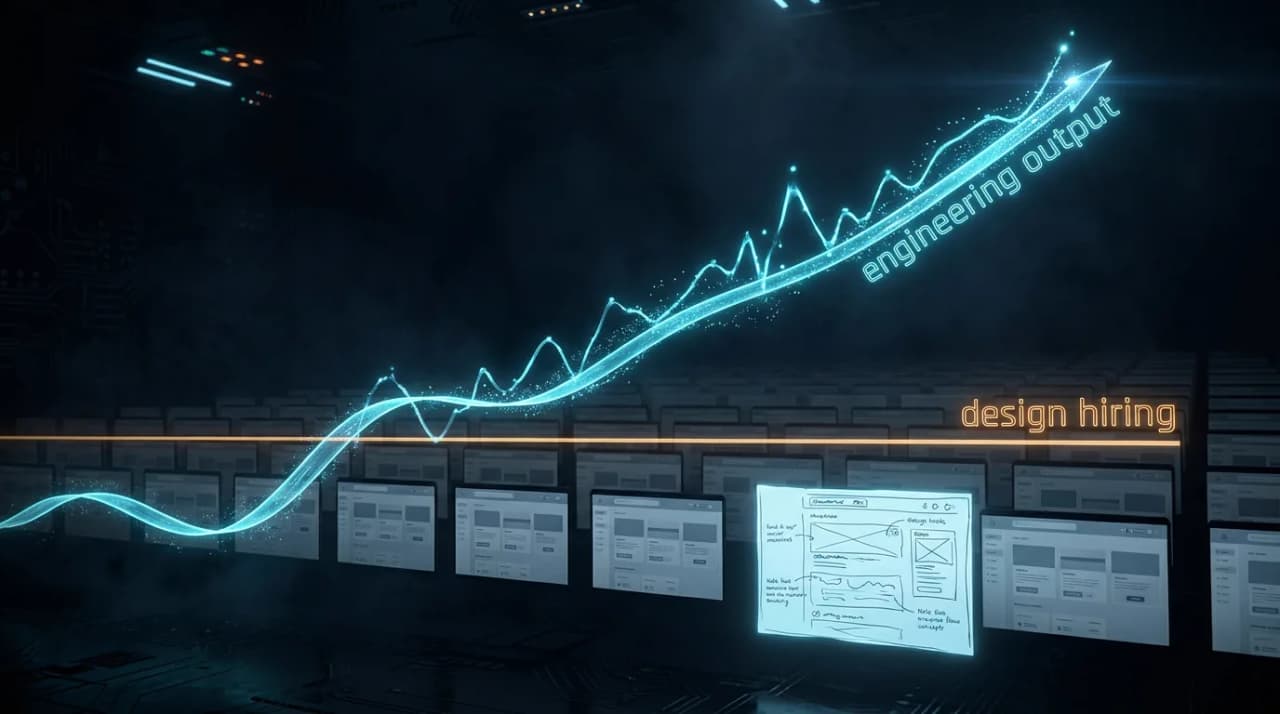
When building a prototype takes a day instead of six weeks, engineering stops being the product bottleneck. Judgment does.
Cheap prototyping does not remove the need for product decisions. It increases the stakes of each one, because the number of plausible options explodes. A team that used to debate one roadmap direction can now hold three working versions in its hands by end of day.
That is the follow-on problem to why traditional discovery is dying. Once prototypes are abundant, teams need a better system for choosing between them.
Cheap prototyping does not remove the need for product judgment. It makes judgment more valuable, because the number of plausible options explodes. A team that used to debate one roadmap direction can now hold three working versions in its hands by the end of the afternoon.
That sounds like progress. It is.
It is also a new failure mode. Teams drown in option surplus, mistake velocity for clarity, and ship the most polished prototype instead of the best product decision.
Build speed used to be the limiting factor. Now the limiter is how quickly your team can decide what deserves trust.
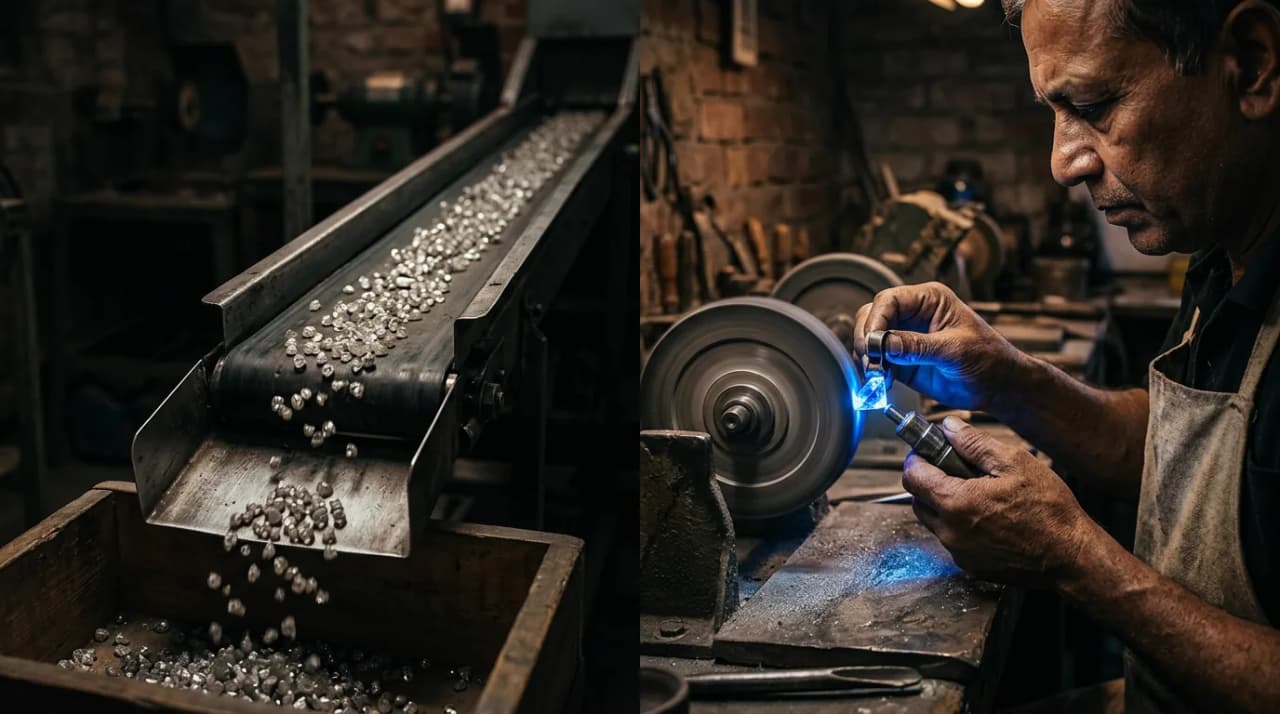
Cheap prototypes create an option surplus
Old product workflows were shaped by engineering scarcity.
You could not ask for five serious product directions because building even one demanded real calendar time. So teams learned to collapse possibility early. They debated. They wrote PRDs. They argued in Figma. They spent weeks trying to agree on the one direction worth funding.
AI changes the sequence.
Now the team can build the first option, the second option, and the weird option someone only mentioned in passing. The cost of exploring solution space falls so sharply that exploring more of it becomes rational.
That is good news, until you notice what has not become cheaper.
Usability testing still takes time. Customer context still matters. Trust still has to be earned. Teams still need a way to determine whether an output is useful, legible, and safe to scale. The human work of interpretation did not get automated just because the prototype showed up faster.
This is why some teams feel strangely slower after adopting AI tools. They are not actually building slower. They are evaluating a much larger decision surface with the same managerial capacity they had before.
More options make weak judgment more expensive
In the old model, weak judgment was cushioned by slow execution. Bad ideas took longer to materialise, which gave organisations more time to catch them.
That safety buffer is gone.
If your team can turn a bad idea into a fully interactive workflow by tomorrow, then poor judgment scales faster too. The cost of backing the wrong thing is lower per prototype, but higher in aggregate because you can create many more wrong things in the same week.
Product leaders need to understand this shift clearly. AI does not reduce the need for judgment. It amplifies the return on judgment and the cost of bad judgment at the same time.
That is why the role of a strong PM, design lead, or founder is becoming more concentrated around decision quality. The work is less about translating ideas for delivery teams and more about filtering abundance into conviction.
I wrote about the career version of this in The Translation Layer Is Dead. Here's What Replaces It.. The replacement is not "everyone becomes a coder". It is that product people who can frame hypotheses, critique outputs, and make crisp calls become much more valuable than product people who mainly coordinate process.
Your prototype is not your decision
One of the easiest traps in AI-native product work is confusing a convincing prototype with a validated direction.
The prototype proves very little on its own.
It proves the concept can be rendered. It proves the toolchain is good enough to generate an interface and a workflow. It does not prove that customers understand it, trust it, come back to it, or behave differently because of it.
That distinction matters more now because the prototypes are getting better. A rough mockup used to look rough. Now an AI-generated prototype can look production-grade even when the underlying idea is weak, confusing, or commercially irrelevant.
This is why I keep coming back to AI product metrics and eval infrastructure. Aesthetic plausibility is not evidence. Teams need explicit criteria for what counts as a winning direction.
Without that, build speed turns into theatre.
Judgment needs a system, not just taste
Taste matters. I have written that taste is the last skill AI cannot commoditise, and I still believe it.
Taste alone is not enough.
In an environment where you can generate abundant options, judgment must become operational. It needs a system. Otherwise every decision turns into a debate between the loudest stakeholder, the prettiest prototype, and the founder's mood that morning.
Four practices matter most.
1. Write the hypothesis before you build
Each prototype should represent a claim, not a vibe.
What user behaviour are you expecting to change? What friction is this meant to remove? What evidence would tell you the idea is working? If the team cannot answer that in three sentences, they are not exploring. They are browsing.
2. Test for behaviour, not opinions
Asking users which prototype they prefer is weak evidence. Watching which one they can complete faster, trust sooner, or return to unprompted is much better evidence.
This is one reason latent demand is your AI roadmap. Real product signal shows up in behaviour people already exhibit, not just in the features they claim they want when a shiny prototype is placed in front of them.
3. Use decision thresholds, not endless iteration
Set the rule in advance.
If fewer than three of five target users complete the workflow without intervention, kill it. If the AI output still needs manual rewriting 60 per cent of the time after two iterations, kill it. If nobody comes back to the feature in the second week, kill it.
Teams that do not define thresholds end up stuck in prototype purgatory. Every version is close enough to justify one more attempt.
4. Separate exploration from commitment
A prototype is permission to learn, not a commitment to ship.
This sounds obvious, yet organisations still over-attach to prototypes because they look expensive even when they were cheap to generate. AI-native teams need a stronger muscle for discarding attractive work quickly.
The PM job is becoming decision design
The most useful product people I know are getting faster at one thing above all else: they can turn ambiguity into a testable decision path.
That means:
- framing the right alternatives
- deciding what evidence counts
- choosing the test method
- setting the threshold for conviction
- making the call without hiding behind process
That is product management. The mechanics changed. The responsibility did not.
A lot of legacy PM process survives because it was built around expensive delivery. Requirements documents, long review chains, and discovery rituals existed partly because a wrong choice imposed high downstream cost. AI lowers the cost of exploration and increases the need for fast, explicit decisions.
So the PM craft shifts upward.
Less time spent writing exhaustive specs.
More time spent constructing decision environments where the team can learn quickly without fooling itself.
Product organisations should optimise for decision throughput
If I were redesigning a modern product team around this reality, I would care about decision throughput as much as delivery throughput.
I would ask:
- How many meaningful options can this team evaluate in a week?
- How quickly can they expose those options to real users?
- How explicit are their success thresholds?
- How often do they kill promising-looking work before it turns into roadmap debt?
Most teams are still optimising for output volume.
That is the wrong metric once prototypes get cheap.
The team that wins is not the one that builds the most options. It is the one that can look at abundant options and make the fewest bad commitments. This is why tests passing is not enough. In AI systems, the visible output can look coherent long before the underlying decision is sound.
Build speed gave product teams a larger search space.
Judgment determines whether that search space becomes advantage or noise.
Fast teams will still lose if they cannot choose
There is a comforting story that AI rewards speed above all else.
That story is incomplete.
Speed matters. I want teams to prototype quickly, learn quickly, and move quickly. But once building stops being the hard part, the teams that separate themselves will be the ones with better filters, better testing instincts, and better standards for conviction.
The next era of product management will not belong to the people who can create the most things.
It will belong to the people who can decide.
Frequently Asked Questions
Isn't this just a new name for product judgment?
No. Product judgment has always mattered. What changed is its position in the workflow. When build costs collapse, judgment stops being one important skill among many and becomes the main rate limiter for team performance.
How is this different from your earlier post about discovery?
That piece argued that building a working prototype is now cheaper than running a traditional discovery sprint. This piece deals with the problem that shows up next: once prototypes are abundant, teams need a better system for choosing between them.
What should teams measure?
Track behaviour-based indicators: task completion, trust, repeat usage, manual correction rates, and willingness to switch from the old workflow. Measure how fast the team can turn those signals into a clear go, iterate, or kill decision.
Logan Lincoln
Head of Product based in Currumbin Waters, Australia. Led a $70M regulated B2B SaaS portfolio at Cotality, then founded OpenChair and took its product strategy from market entry into paid production use.