SaaS Isn't Dead. Hollow SaaS Is.
TL;DR
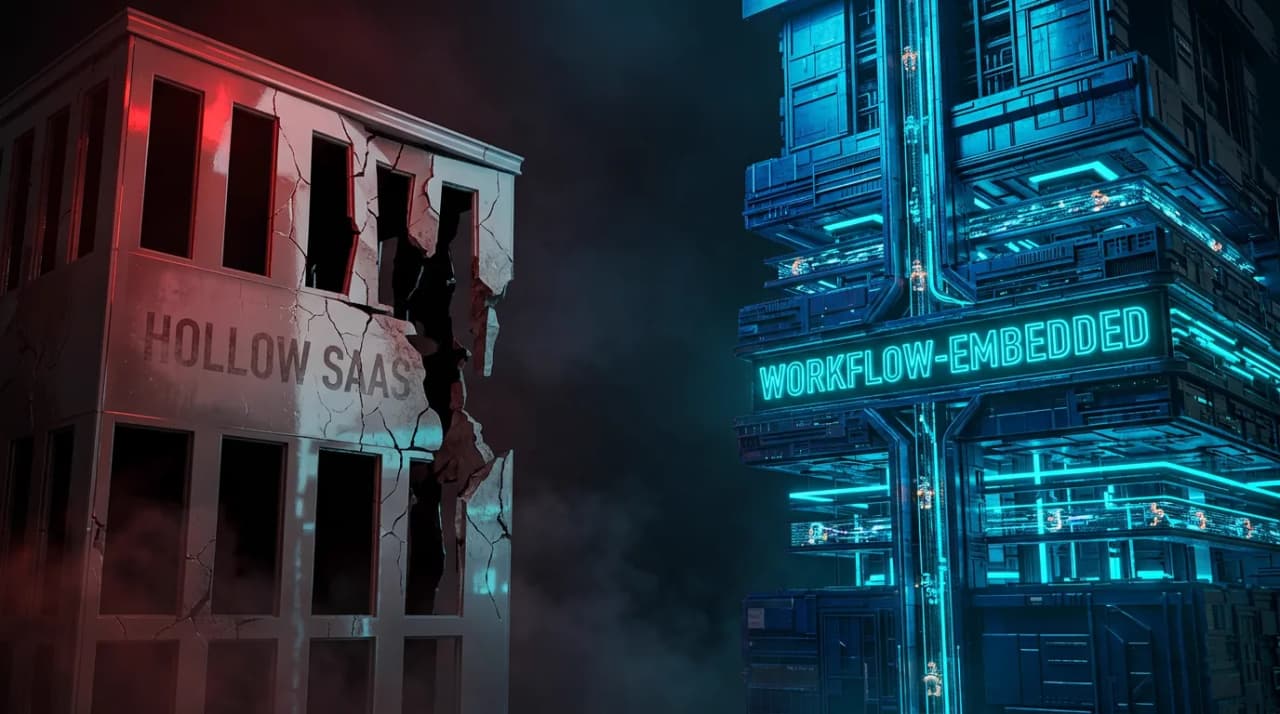
- "SaaS is dead" conflates two completely different things. Hollow SaaS (CRUD apps with no real workflow entrenchment) is genuinely vulnerable. Workflow-embedded SaaS becomes more essential.
- Agents need organisational context to do useful work. That context lives in the SaaS platforms where teams actually operate.
- Public SaaS companies are hardest hit because their moats were distribution and brand, not workflow depth. Agents don't care about either.
There's a narrative running through investor calls and tech commentary right now: AI will kill SaaS. Companies will white-label their own tools, agents will replace software subscriptions, and the whole category is structurally impaired.
It's directionally interesting and analytically sloppy. The distinction it misses: hollow SaaS (CRUD apps with no workflow entrenchment) is genuinely under threat. Workflow-embedded SaaS, the kind where removing the product would require rebuilding years of organisational memory, becomes more essential as agents proliferate.
The argument gets the vulnerable part right. Large public SaaS companies, particularly those whose primary value was aggregating data or providing a UI on top of simple workflows, are in trouble. Their moats were distribution scale and switching cost created by incumbent position. Neither of those protects you from agents that bypass the interface and replicate the core function.
What the argument misses is the other kind of SaaS. The kind that isn't just a database with a front end. The kind where the software is so embedded in how a team actually works that removing it wouldn't just be inconvenient — it would require rebuilding years of organisational memory.
Linear is the clearest current example of why this distinction matters.
What the narrative gets wrong
Kirill Vasiltsev, Linear's CEO, said it plainly: "The narrative is kind of simplistic. People will white-label their own CRM tools? I don't think that's exactly going to happen."
He's not defending SaaS out of self-interest. He's making a structural argument. Some SaaS products were always hollow. They captured market share through distribution, marketing, and the general inertia of enterprise procurement. The product itself was a means to an end. For those companies, the AI era is genuinely threatening because it removes the barriers that made switching painful.
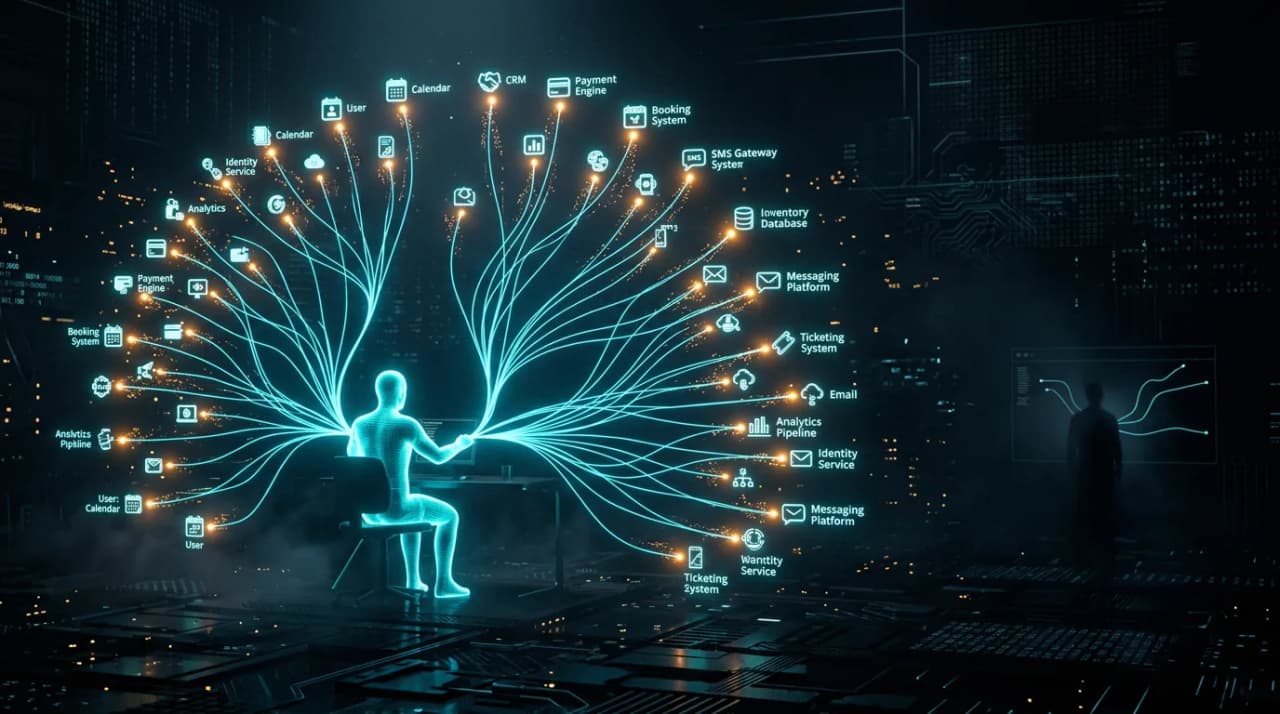
But there's a different category of software: platforms where work originates, gets structured, and accumulates context over time. Project management tools. Code repositories. Support systems. CRMs used by teams that actually live in them, not just ones mandated by IT. For these products, agents don't threaten the platform. They depend on it.
An agent that doesn't know what your team is working on, what's been tried before, what customers have been requesting for months, and what your product team has decided to defer — that agent is going to produce generic work. The software that holds that context isn't a liability in the agentic era. It's infrastructure.
The public company problem
Kirill was direct about which companies get hit hardest: "The public companies probably get hit the hardest here because their moats are kind of disappearing."
This is partly about the nature of their products, but it's also about the nature of their constraints. Public companies have quarterly reporting cycles, investor expectations tied to seat count and ARR growth, and organisational inertia that makes genuine product transformation nearly impossible. They can add AI features. They struggle to become AI-native.
Linear has been private, deliberately under-capitalised relative to what they could raise, and insulated from the market pressure to ship AI features as a show of progress rather than as a result of genuine insight. It's a constraint that most public SaaS companies don't have — and it shows in the quality of what they've shipped. If you're evaluating which platforms will survive the agentic era, the private/public distinction is part of the story. When every public SaaS CEO is standing on stage saying they're "building an agent platform," that phrase starts to mean nothing. Linear actually built one, but only after spending two years understanding what problems agents could genuinely solve in product development workflows.
That patience wasn't possible under public market scrutiny.
Why workflow entrenchment isn't permanent
There's a harder question here, and Kirill acknowledged it directly. Even for a company like Linear, which sits in a structurally strong position, complacency is dangerous. His framing: "We need to live in this day-one world again, where we can't rely on our previous decisions anymore. We have to look at these problems in a fresh way."
This is the correct posture for any SaaS company trying to work out whether they're on the right side of the "hollow vs. embedded" distinction. The answer isn't fixed. A product that was genuinely workflow-embedded five years ago might have drifted into hollowness as the team over-rotated toward growth metrics. The workflow entrenchment that protects you isn't permanent. It has to be earned continuously.
The question isn't whether you have organisational context in your product today. It's whether you're actively deepening it.
How to tell which side you're on
There's a useful test. Ask your most active users: if you removed this product tomorrow, what would they lose that they couldn't get back in a week by switching to a competitor?
I've sat on both sides of this. At Cotality, RP Data was genuinely workflow-embedded: Tier 1 banks couldn't function without it, and the switching cost was years of integrated data workflows and trained users. Other products in the portfolio were closer to databases with dashboards. When AI pressure came, the embedded ones held. The hollow ones didn't have a clear answer.
If the answer is "not much, we'd just migrate the data," you're hollow. If the answer involves things like accumulated decision history, patterns in customer feedback, tribal knowledge about why certain features were built or deferred, workflow integrations that took months to get right: you're embedded.
Hollow SaaS is dying. The market is right about that.
But the product categories that sit where work originates, where organisational intent gets expressed, where the team's collective memory lives — those become load-bearing infrastructure as agent usage scales. Every agent that does useful work in your organisation will need to reach into a system like that. The question is which system that is, and whether your product is it.
Related: The Platform That Owns the Queue Will Own the Agent Layer, Your Killer Feature Will Be Cloned by Friday. Build a Moat., Physical AI Is Leaving the Browser, and The Cannibalisation Paradox: Why Per-Seat Pricing Dies in the Agentic Era
Logan Lincoln
Head of Product based in Currumbin Waters, Australia. Led a $70M regulated B2B SaaS portfolio at Cotality, then founded OpenChair and took its product strategy from market entry into paid production use.